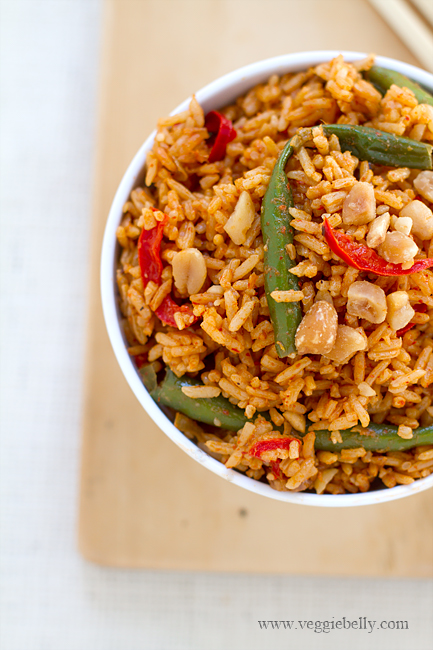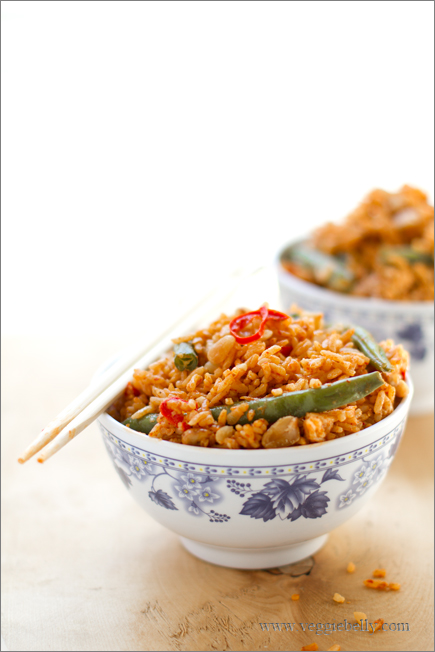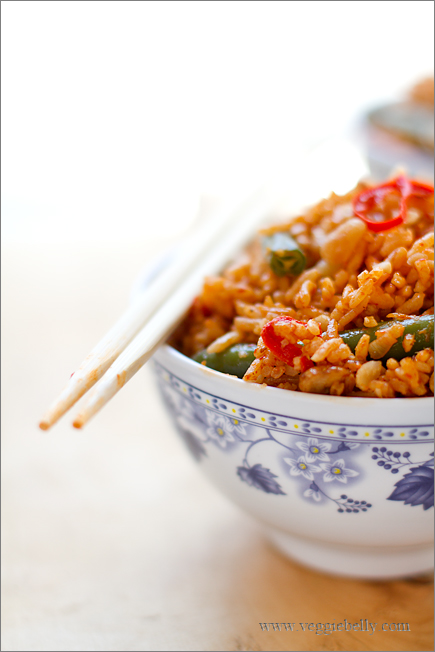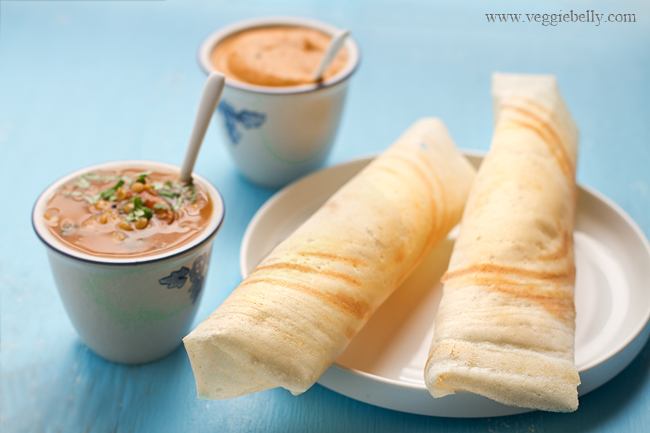
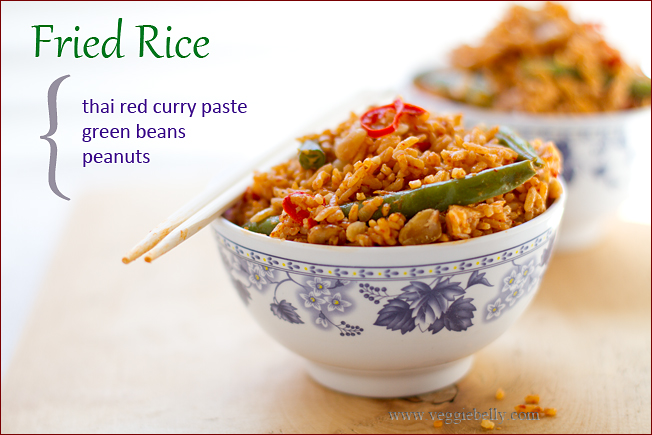
Quick Thai Red Curry Fried Rice with Green Beans

If you have left over rice, you can make this Thai red curry fried rice in 10 minutes. This is a quick, easy meal and a great way to use up left over rice and vegetables. Add some scrambled tofu or a couple of scrambled eggs to add extra protein to this fried rice recipe.

Blanched asparagus, or broccoli, or frozen mixed vegetables will also work in this instead of the green beans. I just happen to think green beans taste nice with Thai red curry paste.


Day old rice is best for fried rice. Also called overnight rice, day old rice it is drier than freshly made rice, so it absorbs flavors nicely, and the rice grains stay separated. If you don’t have left over rice from the previous day, make rice like you usually would (should not be mushy), then spread it out on a plate and place it under a fan or in the fridge till it is completely cooled.

Check out Jaden’s secrets to cooking the best fried rice.


Fried Rice with Thai Red Curry Paste and Green Beans Recipe

serves 4-6

3 cups cooked jasmine rice, preferably a day old (brown rice, wild rice or basmati will also work)
20 haricots verts or green beans
1 tablespoon or according to taste, thai red curry paste
2 tablespoon soy sauce or tamari
1 tablespoon vegetable oil
1 small onion, diced
1 small red pepper, diced
2 tablespoons roasted peanuts, lightly crushed
Chopped cilantro, mint or thai basil for garnish

Trim the ends of the green beans, and cut them in half. Bring a medium saucepan full of water to a boil. Salt the water generously. Add the green beans, and boil for about a minute or till the beans tender but still a little crisp. Drain the beans. Fill the pot with cold water and enough ice cubes to make the water very cold. Dunk the beans in the ice water. This will stop the cooking process and keep the beans bright green and crisp. Drain well.

In a small bowl, whisk the red curry paste, soy sauce, and 2 tablespoons water together till they form a paste. Set aside.

Heat oil in a wok. Add onion and sauté till translucent. Then add red pepper, and sauté for about a minute. Add the drained green beans, and the whisked red curry paste. Stir on high heat for about 30 seconds.

Add cooked rice (must be cooled) to the wok. Using a wide spatula, gently and quickly stir the fried rice to incorporate everything.

Top with crushed peanuts, fried garlic slices, chopped cilantro or mint or thai basil.

Optional: add 2 scrambled eggs to the fried rice.

This fried rice tastes better the next day!

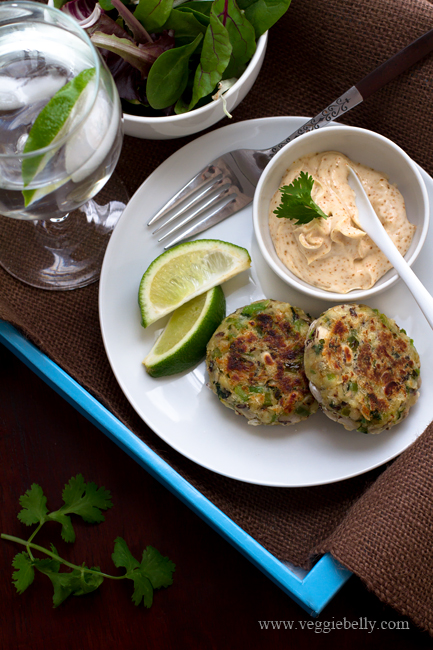
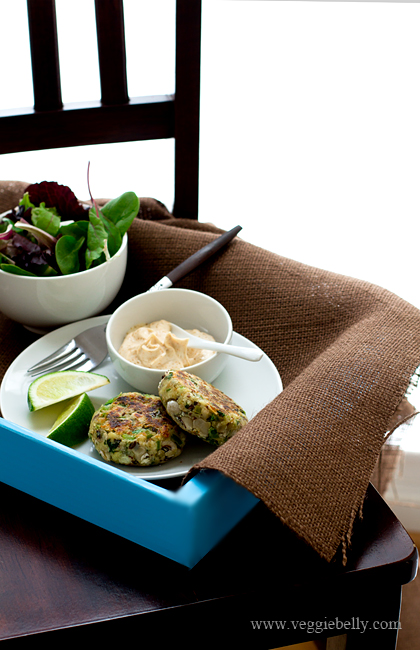
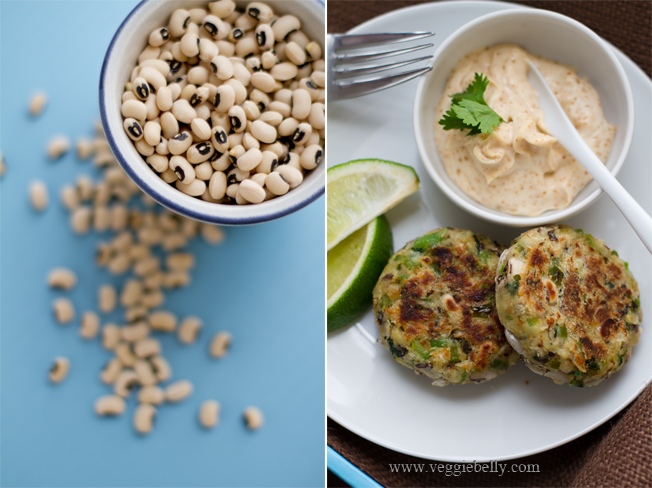
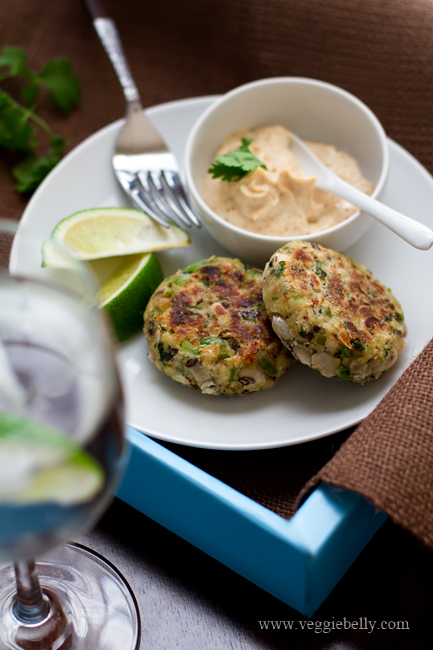
Black-Eyed Pea Cakes with Chipotle Mayonnaise

I had these wonderful black eyed pea cakes at Spotted Dog, a vegetarian friendly restaurant in Carrboro, NC. Their vegetarian black eyed pea patties had jalapenos, red pepper, celery, lime, and cilantro. I think my recipe comes pretty close to Spotted Dog’s! Served with a green salad, this makes a satisfying lunch.

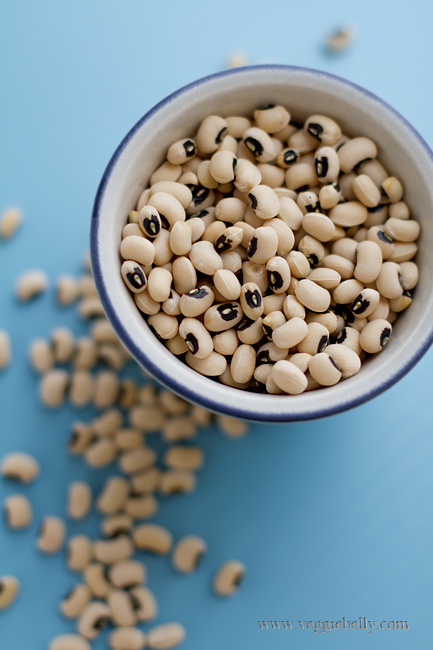
You can used canned black eyed peas as a short cut, but I prefer the texture of freshy cooked dry black eyed peas in this recipe.

You could dip these cakes in butter milk, roll them in bread crumbs and shallow fry them. But this can get messy, and I didn’t want to use too much oil. So to kept things on the simpler and lighter side. I just dusted the patties with a tiny bit of corn starch, and pan cooked them with just a little olive oil.

More black eyed pea cake recipes..

Black eyed pea cakes recipe with liquid smoke on Fat free Vegan

Black eyed pea cakes recipe with cumin, on Soup Spoon

Martha Hall Foose’s Black-eyed pea cakes recipe on Ezra Pound cake


Tips for forming the patties

If the mixture is too wet, the patties will be difficult to form. So make sure your black eyed peas are drained very well drained.
Add more bread to a wet mixture, to make it more firm.
If the mixture is too dry, either mash the black eyed peas more, or sprinkle a little water
Using a wide spatula will make it easier to flip the cakes while cooking them

If you don’t want to pan fry them, you could brush the black eyed pea cakes with oil, and broil them till the tops are browned and crusty. Carefully flip them over, brush more oil and broil the other side.

Black-eyed pea Cakes Recipe with Chipotle Mayonnaise

makes 4 cakes

½ cup dry black eyed peas*
1 teaspoon + 1 teaspoon olive oil
½ teaspoon or to taste, finely chopped jalapenos, optional
1 garlic clove, minced
½ a medium green pepper, diced small
½ cup slightly stale bread, torn into small pieces. I used left over challa bread.
Zest of ½ small lime
1 tablespoon lime juice
1-2 tablespoons chopped cilantro
¼ teaspoon or to taste Seasoned salt (I like Lawry’s and McCormick’s)
1 tablespoon Corn starch

Soak the dry black eyed peas overnight in water. Drain. Then boil plenty of fresh water in a medium pot. Salt it generously. Add soaked peas, and boil till cooked, about 20 minutes.

Drain the peas well. If they are watery, the cakes won’t hold together.

*I prefer dried black eyed peas that have been freshly cooked. But if you don’t want to use dry beans, use canned black eyed peas instead. Rinse and drain them well. Then measure out 1 1/4 cups for this recipe. You may need to use more bread, because canned beans can be wetter than cooked dried beans.

Heat a medium sauce pan with 1 teaspoon oil. Add jalapeno, garlic and green pepper and sauté on medium heat till pepper is soft, about 2 minutes. Add the bread, lime zest, lime juice, cilantro, seasoned salt, and mix well. Turn off heat.

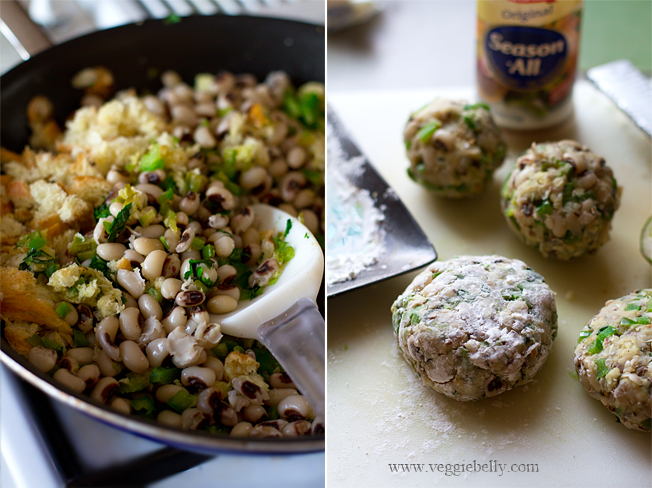
Add the cooked drained black eyed peas. Mix well. Using a potato masher, or the back of a wooden spoon, mash the black eyes peas. The mixture doesn’t have to be completely mashed, some whole black eyes peas (about 30%) will give the cakes a nice texture. Taste and adjust seasoning.

When the mashed peas mixture is cool enough to handle, divide it into 4. Roll each section into a ball. Place the 4 balls on a plate.

Sprinkle corn starch on another small plate. Dust your hands with the corn starch. Using both your corn starch coated hands, pick up a black eyed pea ball and gently flatten it to form a disc like patty. Dust your hands again, and repeat with the other balls.

Heat a medium non-stick skillet with ½ teaspoon oil, add 2 patties, and cook on medium-high heat till the patties are golden on one side. Carefully flip them and brown the other side. Remove to a plate.

Add another 1/ 2 teaspoon oil to the pan, and cook the other 2 patties.

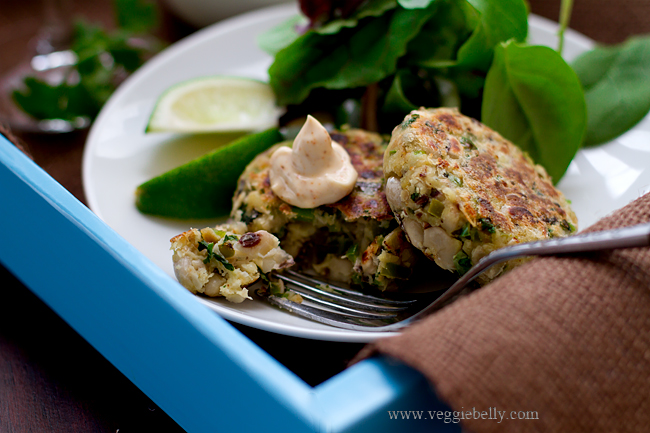
Serve like a burger with chipotle mayonnaise burger buns, tomato slices, lettuce, pickle etc. Or serve over salad greens with chipotle mayonnaise.

Chipotle Mayonnaise Recipe

¼ cup mayonnaise (vegenaise, silken tofu or tahini for vegans)
¼ to ½ teaspoon chipotle powder. Substitute with smoked or regular paprika
½ teaspoon lime juice

Whisk everything together in a small bowl. Keep chilled.

Spicy Szechuan Eggplant with Tofu

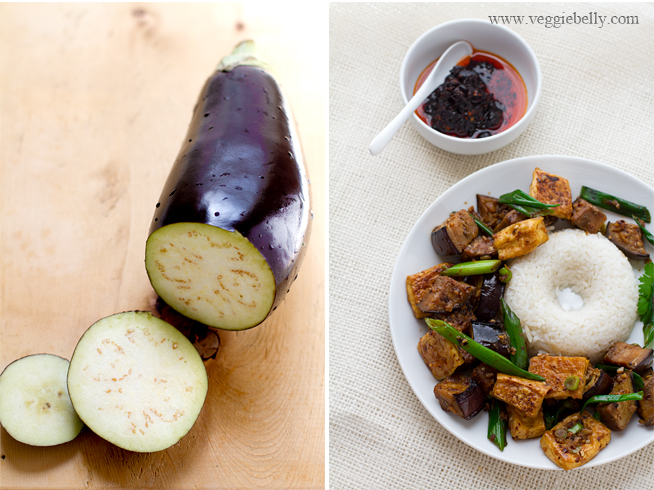
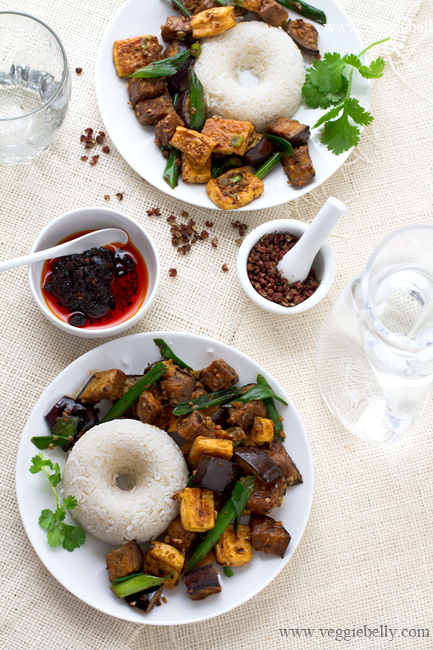
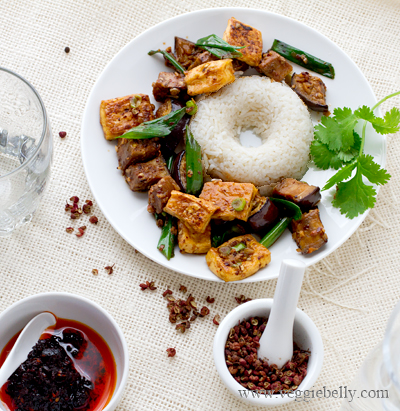
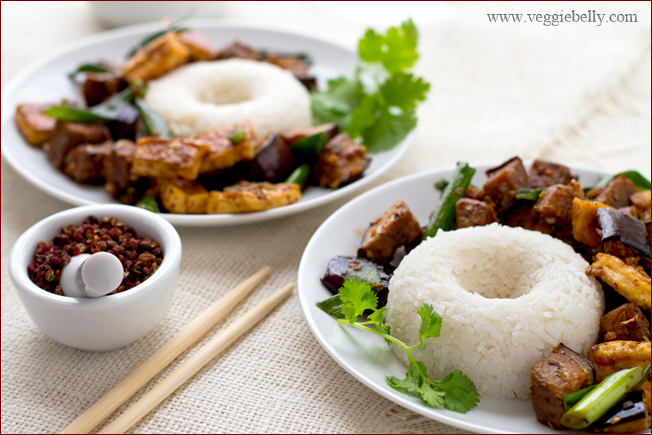
I am on a mission to make myself like eggplant. Many of you on twitter and facebook helped me with your amazing eggplant recipe suggestions to make me like it! I am now trying every method possible (except deep frying!) – grilled eggplant, sautéed eggplant, baked eggplant, stir fried eggplant..and I’m pleased to inform you, I loved the eggplant in this vegan Chinese Szechuan eggplant and tofu recipe!

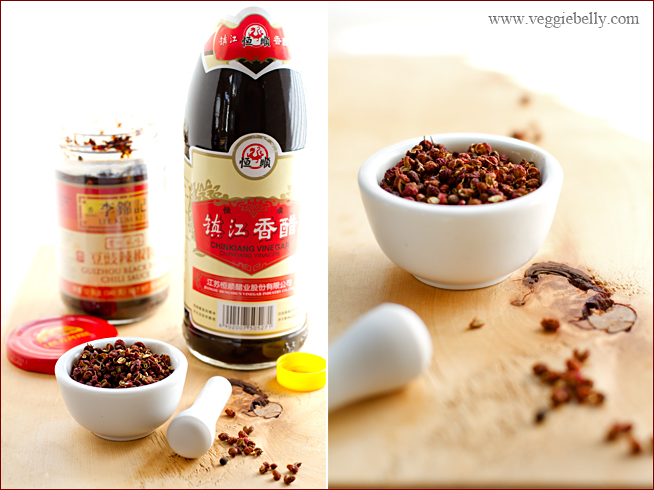
My dear friend and incredibly talented food blogger, Xiaolu of 6bittersweets blog took me on a tour of a local Chinese grocery store. She showed me some amazing and exotic ingredients that I can’t wait to try! I picked up the chili bean sauce, black vinegar, and Szechuan pepper used in this recipe during my Chinese grocery store visit.

The basic idea for this dish comes from Fuchsia Dunlops  book ‘Land of Plenty’. And because Xiaolu has such a passion for food (you DO read her blog don’t you?!), I consulted with her to perfect this vegan Chinese eggplant and tofu recipe.

This recipe does take a bit of time to make, but it is so worth the effort. It tastes like something you’d get at a Szechuan restaurant.You can easily use any combination of vegetables you like for this dish – broccoli, cauliflower, potatoes, or zucchini along with seitan, tempeh or paneer.

Short cuts and substitutions

Instead of pressing and then pan frying your own tofu, buy pre-baked or pre fried tofu in the grocery store
Use store bought paneer cubes instead of the tofu, and lightly pan fry them
Use balsamic vinegar instead of the Chinese black vinegar (it doesn’t taste the same, but it’s the closest substitute for Chinese black vinegar I can think of)
Use regular black pepper corns instead of Szechuan peppercorns

To salt or not to salt an eggplant before cooking? See this post.


More delicious vegetarian and vegan Szechuan Chinese eggplant and tofu recipes

Vegetarian Szechuan eggplant recipe on Weird Combinations
Vegan Szechuan eggplant recipe with beansprouts on No Meat Zone Recipes
Szechuan tofu stri fry recipe  on Eating Well
Szechuan garlic eggplant and tofu recipe on Hypokrtical

I molded the rice using this cute rice mold I got as a gift.

Szechuan Tofu and Eggplant Recipe

adapted from Fuchsia Dunlop’s Land of Plenty
serves about 3 with rice

For the tofu
One 14 oz pack of extra firm tofu
1 tablespoon of vegetable oil, optional

For the eggplant
1 lb purple or Asian eggplant, cut into ¾ inch cubes
1 tablespoon oil

For the szechuan sauce
1 tablespoon Soy sauce
1 1/2 teaspoon Sugar
1/4 teaspoon Szechuan peppercorns lightly roasted in a dry skillet, and then crushed in a mortar and pestle. Substitute with regular black peppercorns. Use less if you dont want it spicy.
1 tablespoon Chinese black vinegar. Substitute with cider vinegar or balsamic
1/2 cup water

½ tablespoon oil
1-3 tablespoon black bean chili sauce (this sauce is very spicy! Start with 1 tablespoon, taste and add more at the end of cooking if needed) update: I used “guizhou black bean chili sauce”, the brand is Lee Kum Kee. Whatever brand you buy, make sure the ingredients include fermented black beans and chili peppers.

2 tablespoons finely minced ginger
2 tablespoons finely minced garlic
5 scallions/green onions, chopped into 1 inch pieces
2 teaspoon sesame oil, optional

press the tofu
Drain the tofu and pat it dry. Place several layers of paper towels on a table. Place the drained tofu in the middle of the paper towels. Wrap the towels firmly, but without breaking the tofu, around the tofu block (like a gift wrap). Wrap this in an absorbent kitchen towel. Place a plate over the tofu parcel. Put something heavy (like a few cans of beans) on top of the plate. Let the tofu sit with the weights on top for about 4 hours (longer won’t hurt).

cook the eggplant
In a large non-stick skillet, heat the oil. Add the eggplant cubes in a single layer, without crowding. Fry the eggplant cubes on high heat till they are golden, about 3 minutes for american purple eggplants. The eggplant doesnt have to be fully cooked, just browned on the outside. Flip the eggplant pieces and brown the other side. Make sure the eggplant cubes are in a single layer, so they brown quickly. Don’t over-crowd the pan. Do this in batches if needed.

Set the eggplant aside on a plate.

make the tofu
Cut the compressed tofu into ¾ inch cubes

Wipe the skillet clean. Turn heat to medium. Arrange the tofu cubes in a single layer on the skillet. I don’t use oil for the tofu, but you can use 1 tablespoon of oil if you like. Cook tofu on medium heat. Don’t move around or disturb the tofu cubes while cooking. When brown on one side (about 12 minutes), flip the tofu cubes and brown the other side. When the tofu is light brown on all sides, remove it and place it in a plate.

(If you don’t want to pan fry the tofu, toss pressed tofu it in ½ tablespoon oil, spread the tofu cubes in a single layer on a baking sheet lined with parchment paper, and bake it in a 375f oven for about 40 minutes or till the tofu is golden, and slightly chewy).

make the Szechuan sauce
In a medium bowl, whisk together the soy sauce, sugar, Szechuan pepper, vinegar and water. Keep the bowl at hands reach.

Heat a large wok with oil on high heat. Carefully add the chili bean sauce, ginger and garlic, and stir for 30 seconds. The chili bean sauce may give out fumes, so stand back. Take care not to burn it.

Remove the wok from heat. Extend your arm with the wok, so that nothing splashes on you. Now carefully pour in the whisked ingredients.

Return wok to the stove. Immediately add the scallions/green onions, eggplant, tofu, and 1/2 cup water. Toss gently and cook on high for 5 minutes or till the eggplant has softened but is not mushy. Add more water if the dish is too dry. Taste the dish and add more chili bean sauce if you like.

Drizzle sesame oil, if using.

Serve with steamed rice or wheat tortillas and extra soy sauce and chili bean sauce on the side

Sweet Potato Samosa Pops

It seems like pops (food on sticks) are every where. Starbucks recently came out with cake pops. And the amazingly talented Bakerella has made cake pops into an art form . I’m jumping on the pop band wagon with this savory sweet potato samosa pops recipe! Yay! for samosa on a stick!

Im modernizing the Indian samosa by using sweet potato, making it mini sized, and putting on a lollipop stick.

You could also use this recipe for making regular potato samosas, green pea samosa, or pumpkin samosa. Whatever samosa filling you use, make sure you dont over stuff the puff pastry. Also make sure your lollipop sticks are oven-safe before baking! 

I use puff pastry because it’s so delicious and easy (and its vegan). You could ofcourse use your favorite samosa shell recipe if you have one.

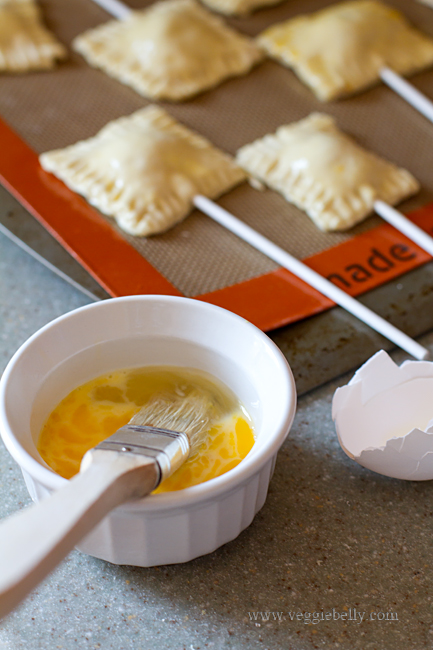
An egg wash will make the surface of the samosa pops beautifully golden. Vegans can leave out this step and still get great tasting samosas.

I serve samosa pops with the same sauces one would use for regular samosas – tamarind chutney and mint chutney. This recipe goes to the Chez Cayenne’s House Favorites: Vegan event.

Sweet Potato Samosa Pops Recipe

Makes 20 pops

1 large Sweet potato (substitute with regular potato or ¾ cup peeled, cooked butternut squash or pumpkin)
1 tablespoon vegetable oil
¼ teaspoon cumin seeds
1 small onion, finely chopped
1/2 tablespoon minced garlic
½ tablespoon minced ginger
¼ teaspoon turmeric powder
¼ teaspoon, or to taste red chile powder
¼ teaspoon coriander powder
¼ teaspoon garam masala
1/8 teaspoon aam choor or mango powder (substitute with 1/2 teaspoon lime juice)
1 tablespoon chopped cilantro
Salt
2 sheets of puff pastry, thawed for about 30 minutes.
1 egg (vegans leave this out)
1 tablespoon milk (vegans leave this out)

20 six inch lollipop sticks (I used ‘Candymaker’ brand; it is oven-safe)

Pre heat oven to 400f

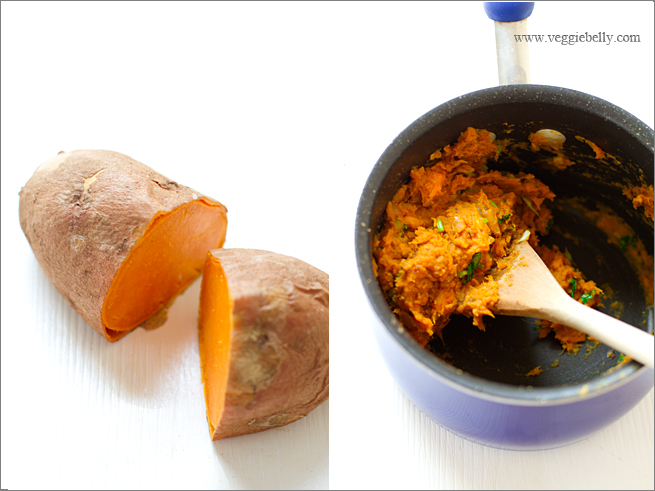
Wrap the sweet potato in a paper towel and microwave on high for about 4 minutes or till the sweet potato is cooked through. When it is cool enough to handle, peel the skin and lightly mash.This is the easiest way to cook and prepare a sweet potato for this recipe. Alternatively, you could peel, cube, and boil the sweet potato in water till tender. You need about 3/4th cup of cooked and peeled sweet potato.

While the sweet potato is cooking, heat the oil in a medium sauce pan. Add cumin seeds. When they start to sizzle, add the chooped onion and cook on medium heat till onions are lightly browned. Then add the ginger and garlic and cook for about a minute. Add turmeric, chilli, coriander powders, garam masala, and aam choor. Stir for about 30 seconds, taking care not to burn the spice powders. Turn off heat. Add the mashed sweet potato, cilantro and salt. Mix well. Taste and adjust salt and seasonings.

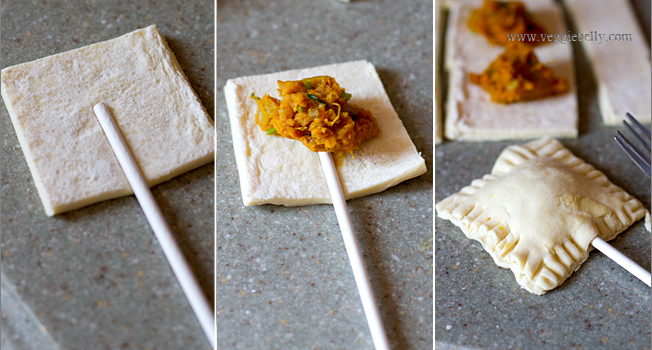
Lay out the thawed puff pastry on a clean work top. Measure out 2 inch squares. Using a sharp knife, cut the puff pastry sheets into 2 inch squares. You should have about 40 squares.

(If you have any odd sized bits of puff pastry left over after cutting, simply bake the scraps without filling, along with the rest of the samosas. You can snack on these!)

Press a lollipop stick onto the center of 20 of the squares. Mound 1 teaspoon of the sweet potato filling on top of the squares with the lollipop sticks. Don’t over fill.

Cover these with the other 20 squares of puff pastry. Gently stretch them a little so they fit over the filling mound. Using the tines of a small fork, press down and seal all the edges. Make sure they are sealed well. (Look at photos above).

(If you wish to freeze the samosa pops, you can do so at this point. Lay out the samosa pops on a single layer and place in the freezer. Once they are frozen hard, remove the samosa pops and put them in a zip lock bag, and return to the freezer for future use.)

Lay the samosa pops on a baking sheet lined with parchment paper or a silicone baking mat. Whisk together the egg and milk in a small bowl. Brush this egg wash over the samosas.

Bake in a 400f oven, for 15 minutes or till puff pastry is golden.

Serve with store bought tamarind chutney.

The Perfect Dosa Recipe (Rice and Lentil Crepes)


Perfecting my dosa recipe and method hasn’t been easy. It took a lot of experimentation, but finally I have the best dosa batter recipe and method for you. Read on to learn hot to make the perfect dosa-idli batter recipe, a dosa grinder giveaway, and your questions about dosa and idli batter answered by the experts!
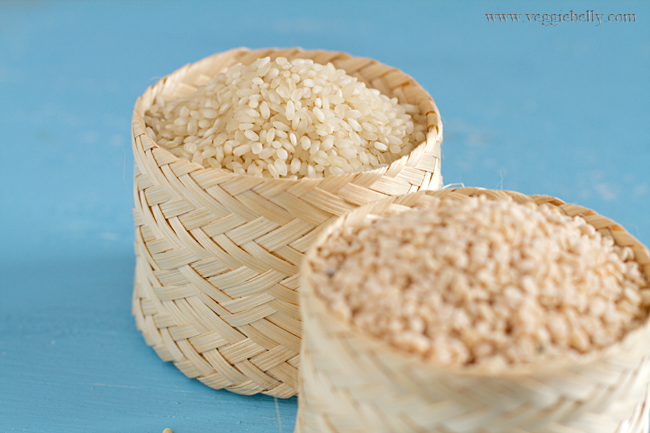
Dosa, Idli Dos and Don’ts

Do use a hot griddle for dosas
Do use your hands to mix the ground batter
Do use whole urad dal (urad gota)
Do use a wet grinder or other similar heavy duty grinder/blender for the batter
Do place the batter in 80-90 degrees F for fermentation
Do experiment with various types of rice and urad dal to find what suits you best
Don’t pour dosas using cold batter
Don’t make dosas on an unseasoned pan (see recipe below for the onion trick)
Don’t use poor quality rice and dal
Don’t use an air tight lid when batter is fermenting
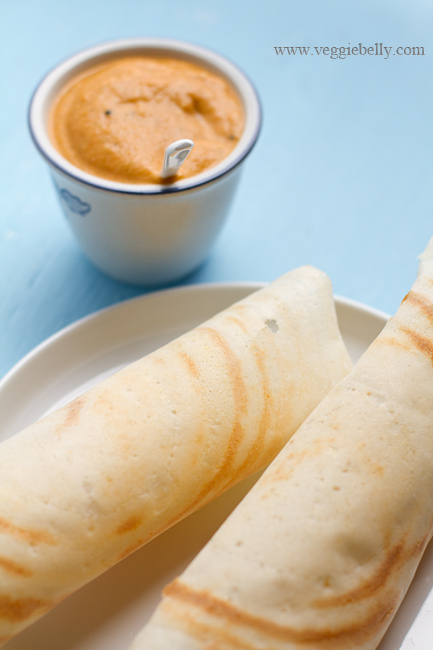
 

Your Dosa and Idli Batter Questions Answered by the Experts

Ive talked to several people about the art and science that is dosa-idli making.  For this post, we have two of the most knowledgeable people on this topic to answer your idli, dosa questions.

Chef KN Vinod, is an award winning restaurateur who runs three of Washington DC’s favorite Indian restaurants Indique, Indique Heights and Bombay Bistro. At his restaurants, Chef Vinod regularly hosts celebrities and politicians including (KR Narayan and Hillary Clinton!). Chef Vinod blogs at http://chefvinod.typepad.com/. You can also find him on twitter and facebook. For today’s Q&A, Chef Vinod has elicited the help of his friend, and food scientist Dr. Danny Chawan.

Ms. Andal Balu is the owner of Atlanta based Inno Concepts, a company which sells kitchen appliance for Indian cooking.  Mrs Balu is a successful business woman, gourmand, and America’s expert on dosa/idli making. Inno Concepts is the generous sponsor of today’s grinder giveaway.

My idli and dosa batter doesn’t fermentation properly. I let the batter sit in the oven with the light on overnight and it is completely unchanged even 10 hours later. Ive tried everything. Help!

 Andal Balu: Use the soaking water to grind the rice and dal for proper fermentation. You have to mix the batter with your hand. If you mix it with ladle, it may not ferment right (body heat from your hands helps kickstart fermentation). Also cover the batter with a lid that fits loosely - do not use an airtight lid.

 Chef Vinod: Fermentation is always a problem in colder places. Our modern living with air filters etc. also inhibits the capture of wild yeast from the air. Sometimes indoor air, particularly in winter with all the doors and windows shut will be low in air borne yeast cells. When all else fails, I would recommend using some yeast. Use half teaspoon in half cup water and a teaspoon of sugar to kick start yeast growth. Add to a gallon of batter.

 Sala’s note: If you’ve tried everything, you might want to change your brand of rice and dal and see if that does the trick. Poor quality ingredients = poor quality fermentation.
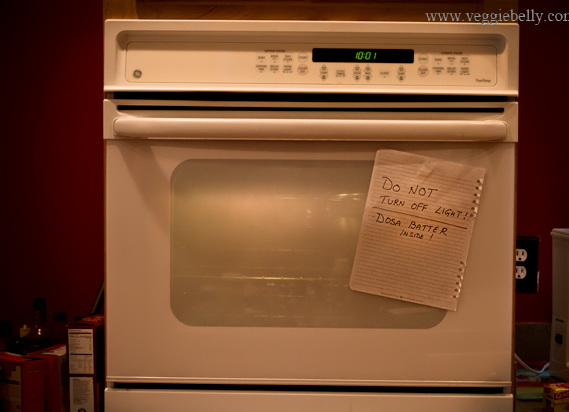
In cold climates, place batter in an oven with the light on for warmth. Leave a note so no one turns off the oven!

What proportion of rice and ural dal do you personally use?

Andal Balu: I use the same proportion for idlis and dosas. 5 cups parboiled (idli) rice, and 1 cup whole urad dal (gotta). I make idlis with this batter the first day, dosa on the second, and uthappams on the third day.  

Chef Vinod: At the restaurant we use 4 cups long grain rice, 1 cup parboiled (idli) rice, 1 cup urad dal, and a little methi seeds

Sala’s note: Everyones recipe will be different because quality of rice and dal used, quantity of batter made, and temperature all affect the ratio. Use these proportions as a guideline and then experiment.

Should I grind the rice and dal separately or together?

Andal Balu: Separately. Grinding dal separately will make it fluffy, resulting in excellent fermentation. It will also volumize the batter when fermenting which is important for fluffy, soft idlis.

What consistency and texture should my ground dosa and idli batter be?

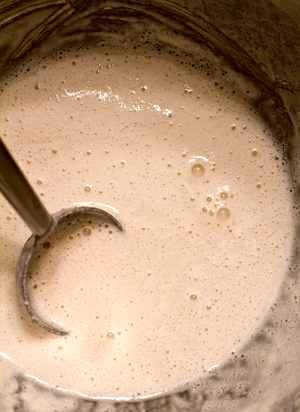
Andal Balu: Grind dal till it is very soft and foamy. Also grind the rice till smooth. Add enough water to the batter so that it is thick, but when you scoop it in your hands, the batter falls through your fingers. This is what I do for both idli and dosa.
Does is matter if I use tap water or filter water for soaking and grinding? 

Chef Vinod: If your tap water is highly chlorinated, it could inhibit fermentation. In this case, use filtered water.

Why do we use fenugreek or methi seeds in dosa-idli batter making?

Chef Vinod: Methi seeds contain compounds high in beta-glucans.  They help hold carbon dioxide, which makes idlis fluffy and soft. Methi seeds also give viscosity to the batter.

If I rinse the dal, will it take away the necessary properties to ferment?  

Chef Vinod: Washing is done to remove any dust, and impurities from the dal and rice. Althought some old time cooks soak the dal and rice without rinsing and wash just before grinding.

How much salt should I add to my dosa and idli batter?

Andal Balu: About 1/2 teaspoon for one cup of dry ingredients (rice + dal) plus more according to taste. Adding enough salt is important for proper fermentation.

How can I get good textured idlis at high altitude? What are the adjustments for altitude?

Andal Balu: The rice needs to be ground finer so it can cook faster at higher altitudes. If the rice is coarse, it will take longer to cook and will feel gritty in the mouth. Make sure a warm temperature is maintained when batter is fermenting.

Chef Vinod: I turned to Dr. Chawan for this. He says changing the proportion of dal and rice for higher altitudes isnt necessary. Fermentation is done by yeast, and yeast grows in high altitudes as well, and produces carbon dioxide which is the key component of making fluffy, soft idlis. Pay attention to the fermentation temperature; make sure your batter is in a warm place. A little glucose or corn syrup will also make your batter rise better.

My dosas always turn out dry and brittle, what am I doing wrong?

Andal Balu: Check the consistency of the batter – is it too thick? Check the temperature of the batter – make sure it is at room temperature, and not straight out of the fridge. Make sure that the pan is hot enough when you pour the batter. Check it by splashing couple of droplets of water on the pan and it should sizzle.

Chef Vinod: Two scientific reasons. 1. Not enough dal in your batter. Protein in dal is responsible for the softness. Try increasing your dal proportion. 2. Amylopectin in rice. According to Dr. Chawan, there are two kinds of starches present in rice and grains – Amylopectin and Amylose. If the rice is low in Amylopectin and high in Amylose it can cause the dosa to be dry and brittle. Sala’s note: Try experimenting with different brands of rice.

Ok, but there is no way I can determine the chemical composition of a bag of rice at the store. Is there a quick fix for dry and brittle dosas?

Chef Vinod:  As a quick fix, if you have some tapioca flour handy, Dr. Chawan recommends trying to incorporate some into the batter as it is very high in Amylopectin. I have not personally  tried it.
My idlis are pale yellow. How do I get white idlis?

Andal Balu: If the ground batter does not ferment properly, the idlis will be yellowish (see the question and answer on fermentation). Also make sure the consistency of the batter is right – once the urad and rice batters are mixed, take the batter in your hand, it must fall freely back into the vessel.

Chef Vinod: If your batch of urad dal has been contaminated with immature urad beans or partially germinated beans, this will produce some enzymes which will cause idlis to become yellowish or pinkish. Sala’s note: Try a different brand of dal.

I would love some tips on how to make paper thin, crispy dosas

Andal Balu: Grind the rice fine. Don’t use extremely thick batter. Use an iron skillet for best results. Bring refigerated batter to room temperature before making dosas. You can take it out of the fridge ahead of time. Or you can heat some water in the microwave and add to the thick batter to make it thin and to bring it to the room temperature. Between dosas, grease the tawa or skillet lightly with oil and then pour the batter. Add extra oil after the batter is poured on the skillet.

Sala’s note: I add chana dal (soak 3 tablespoons of channa dal with every cup of urad) for super crispy, golden, restaurant style dosas.

How do you get the nice golden color you seen in restaurant dosas?

Chef Vinod: Add a little besan (gram flour) in very less quantities that you cannot make out that besan has been added. OR, add a little sooji (cream of wheat) to make the dosa really golden and crisp. This again is done in very less quantities that you cannot make out.

Andal Balu: You will get nice golden brown dosas if you bring the batter to room temperature. If you use the cold batter, the dosas will stay white.

Sala’s note: I add channa dal (soak 3 tablespoon for every cup of urad dal) for golden colored dosas.
Why are my idlis hard and rubbery? How do I make soft and fluffy idlis?

Andal Balu: Keep four thing in mind for soft, fluffy idlis.
1. proper fermentation (see earlier questions)
2.proper rice:dal proportion
3.don’t overcook idlis, this will make them hard. Steam idlis for about 12 minutes if using a conventional idli steamer, and 15 minutes for an electric one.
4.never pressure cook idlis

What is the proper way to eat a dosa, what are the accompaniments, what do you dip it with? Is there a dosa etiquette?

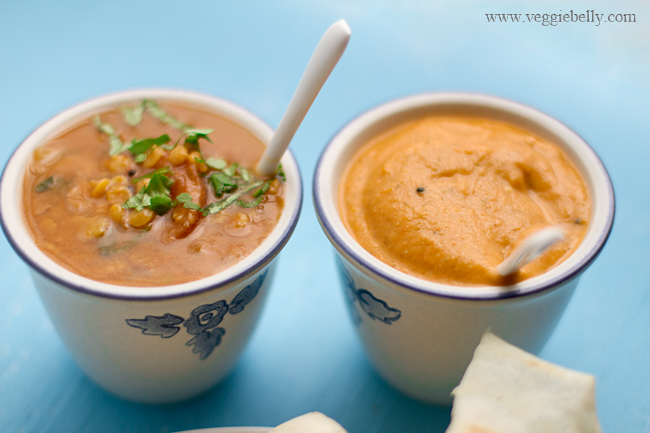
Andal Balu: There is no dosa etiquette. Enjoy it however you want. Side dishes recommended – idli chilly powder, coconut chutney, tomato chutney, coriander or cilantro chutney, yogurt, Chinese garlic pickle, potato masala, sambar…possibilities are endless! 

Chef Vinod: Dosa is made and served differently from region to region in India – so I would  not  say that a particular way is right or wrong. Most places in south India serve dosas with sambar and coconut chutney.

Sala’s note: Serve yourself a dosa on your plate. Pour sambar into cups, if they are available. Serve chutney, dosa or idli podi (also called gun powder) and potato masala on the plate. Tear off a piece of dosa and dip it into any combination of the sambar, chutney, podi and or potato. Lick your fingers, and enjoy :)


The Perfect Dosa Recipe

Serves about 8

1 cup sona masuri rice (or similar medium grained rice)
1 cup idli rice (parboiled rice)
½ cup whole urad dal (skinned black gram)
½ teaspoon methi seeds (fenugreek seeds)
Salt 1 teaspoon

Special equipemt: a wet grinder. This is a heavy duty grinder that is perfect for dosa and idli batter. You could use a blender instead, but the results wont be the same.

Place the rice in a large bowl. Place the dal and fenugreek seeds in another large bowl. Wash the rice with room temperature water. Drain out the water, and fill the bowl with more water, so that the water is about 2 inches above the rice.

Do the same with the dal and fenugreek – wash, rinse, and fill with water. Let rice and dal soak for about 6 hours.

The dal should now be swollen, and the rice will be easy to break with your fingers.

Pour about 2 tablespoons of the dal soaking liquid into a wet grinder. Turn the grinder on. Then, using your hands, scoop the soaked dal, allowing excess water to drain back into the bowl. Add dal to the grinder, hand fulls at a time. Grind till the dal is fluffy and silky smooth – about 15 minutes (grinding time will vary depending on the grinder and quantity of dal). You should have fluffy clouds of ground dal – think liquid marshmallows.

Sprinkle a little soaking water into the grinder as and when needed, to move the batter along. Turn off grinder, and scoop the ground dal using your hands and put it into a large (4 quart) bowl.

Now grind the rice (no need to wash the grinder). Add 1 cup of the rice soaking liquid into the grinder and turn it on. Add the rice to the grinder. The rice should be ground to a smooth, but ever so slightly gritty batter – about 20 minutes (will vary depending on the grinder and rice). Sprinkle water in the grinder as and when needed.

Using your hands, scoop the rice batter into the bowl with the dal. Add salt, and stir gently using your hands. You should now have approximately 2 quarts of batter.

Cover the bowl loosely, either with a large tea towel, or a lid. The lid should not be air tight.

If you live in a warm climate leave the batter over night in a warm place (about 8 hours) to ferment. Ideal dosa idli batter fermentation temperature is around 90f or 32c.

If you live in a cold climate, turn on the pilot light of your oven. (do not turn on your oven!). Place the batter bowl on the lowest rack, farthest away from the light. The light will give the batter enough warmth to ferment. Leave the bowl in the oven for about 10 hours for dosa batter to ferment. Sometimes, the batter may take up to 18 hours to ferment in colder climates.

The fermented batter should be frothy, and almost doubled in volume. For this recipe, you should land up with at least 3 quarts of fermented batter.

If the fermented batter is too thick, add a little water. For dosas, the batter must be of pouring consistency, but not runny.

Heat a 9 inch nonstick skillet on high heat. Sprinkle a few drops of water on the skillet. The water should sizzle and evaporate away on the count of 4. This means the pan is hot enough to make dosas.
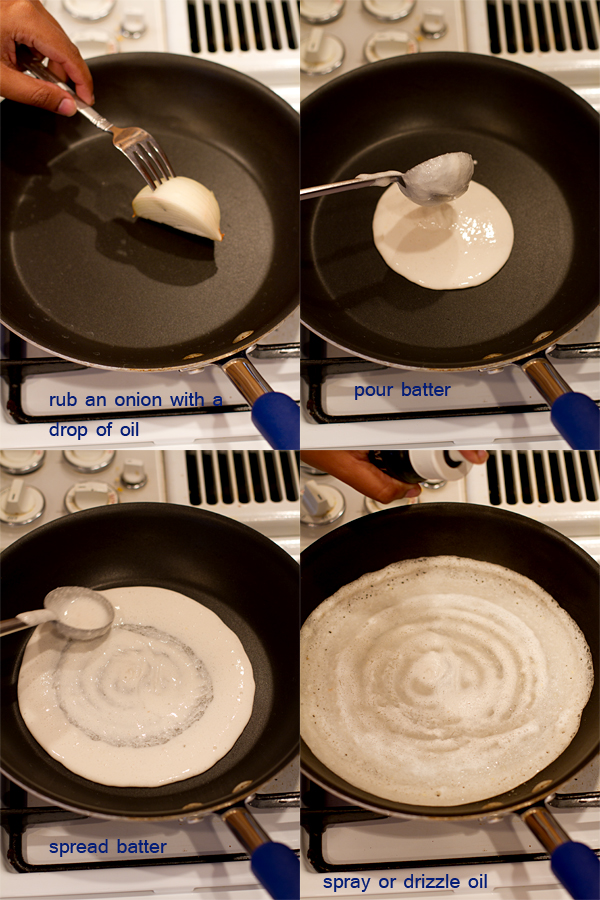
Cut a small wedge from an onion. Stick a fork into the onion (See photos above). Add a drop of vegetable oil to the hot pan, and spread the oil around, using the onion. (Just a drop of oil will do for a non-stick pan.)

Now pour a ladle (1/4 cup) of batter onto the hot pan. Using very little pressure, swirl the ladle in concentric circles, to spread out the batter (see photos).

When the batter is fully spread, spray or drizzle a few drops of vegetable oil all over the dosa.

Cook on medium-high heat till the bottom side of the dosa becomes lightly brown.

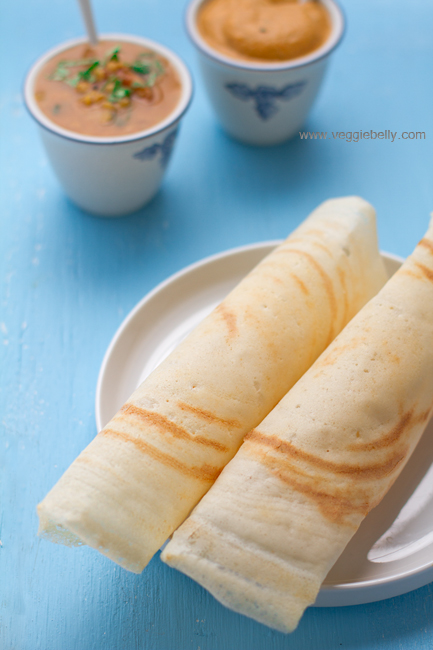
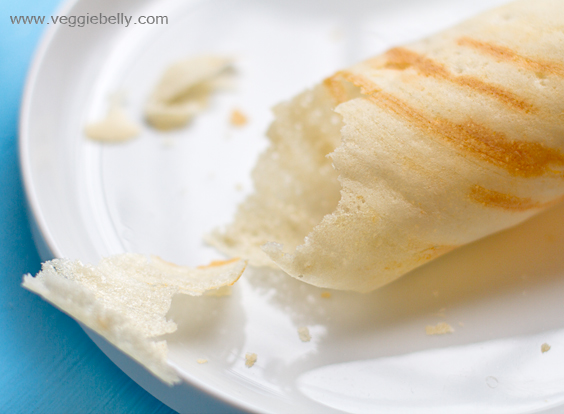
At this point, you can fold the dosa over in half, or roll it into rolls like ive done, and serve. (For extra crispy dosas, flip the dosa over, and lightly brown the other side).

Taste your first dosa, and adjust salt in the batter if needed.

Serve with sambar and tomato chutney.

———————————————————————————————————————–

This giveaway had ended. We have a winner!

Please contact me to claim your prize! veggiebelly@gmail.com


Win an Ultra Pride Plus Wet Grinder!

1.25l capacity
Voltage 110V AC 60Hz
Sleek design, easy to clean
Kneader attatchment for dough
Perfect for grinding dosa, idli, vada batters
More features here

Ive had mine for 6 years and love it :)

** When you entered the giveaway if you checked the ‘send me a coupon’ option, iNNo Concepts Inc will send you a coupon for $10 off Ultra Pride Plus grinder plus a free gift worth $20 or $20 off all other larger sized Ultra grinders plus a free gift worth $20. You can use this coupon between April 9th and April 15th. US & Canada shipping only. No cash redemption.

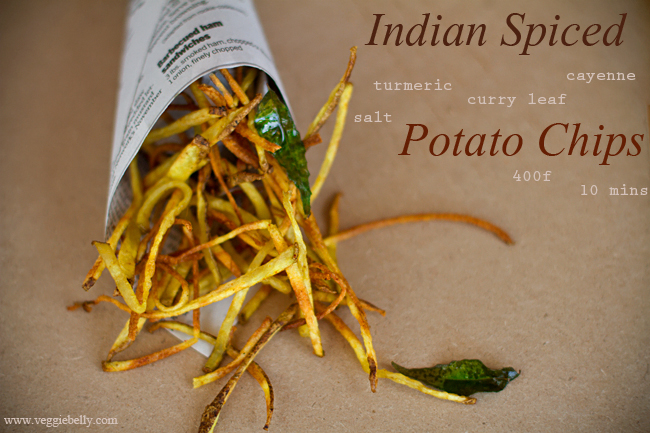
Indian Spiced Potato Chip Sticks. Baked, not Fried!

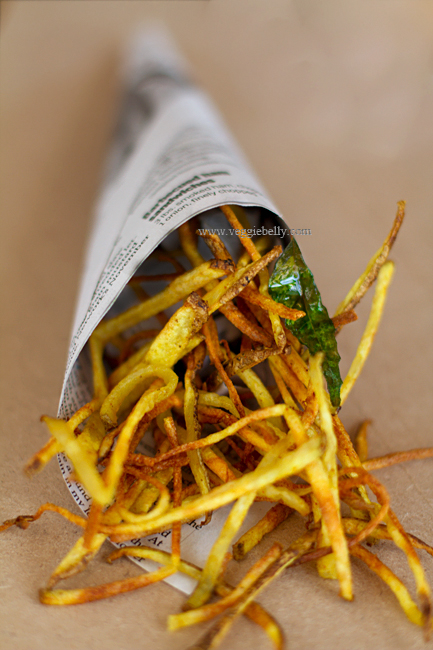
I love how simple this oven/microwave baked potato chips recipe is. All you do is cut a russet potato into think sticks, toss it in oil, salt, cayenne or chilli powder, and turmeric. Add a fer curry leaves for aroma. Bake or microwave. Yes, I said microwave! So much easier and healthier than deep fried potato chips!

You could spice up the potato chip sticks in many ways; I love the turmeric, chilli powder or cayenne powder, curry leaf combination. The curry leaves get crispy and so fragrant

Serve Indian spiced potato chips as a side or a snack, in a newspaper cone. They go well with my brown rice and black bean  burgers.

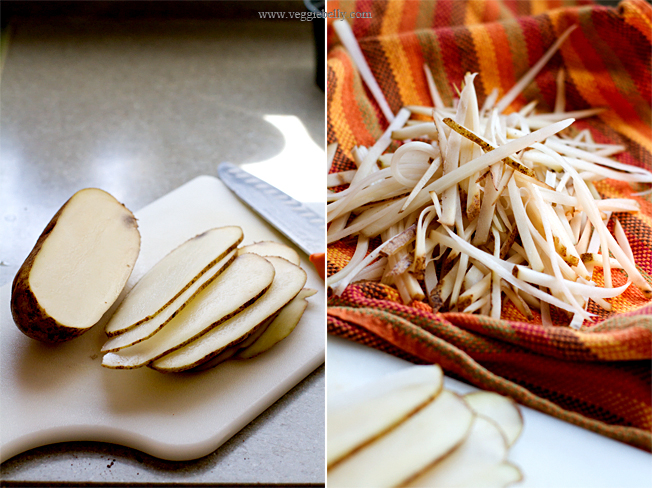
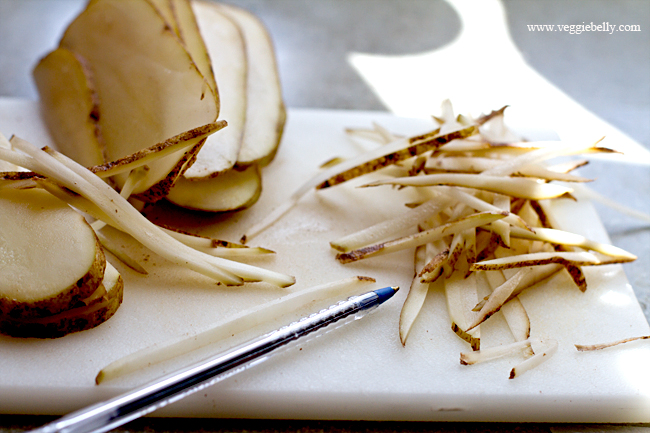
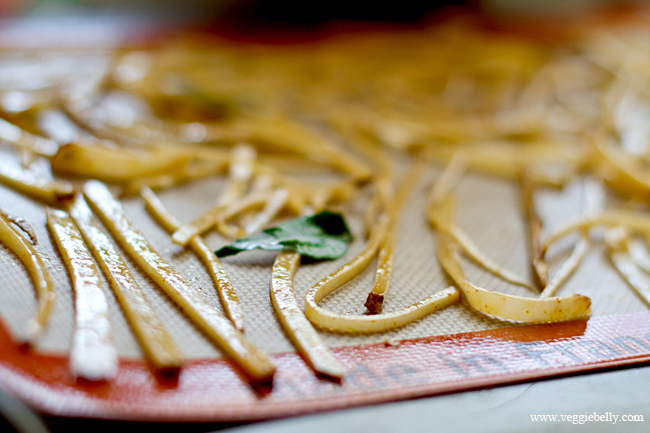
Cut the potato sticks really thin, this way they bake very quickly in the oven. Use either a mandoline or a large sharp chef’s knife to cut the potatoes into 1/8th inch slices. Stack up the slices and cut them into thin sticks. The sticks should be thinner than a pen or french fry.

More oven baked or microwaved potato chip recipes
Martha Stewart’s baked potato chips recipe
Oven fried potato chips recipe  on Simply Recipes
Spicy baked potato chips recipe on Chow vegan
5-spice potato chips recipe on the Hungry Mouse
Uncle Bill’s microwave potato chip recipe  on Food.com
Microwave potato chips recipe  on Eating well
Homemade microwave potato chips recipe  on Sweet Savory Life

Indian Spiced Baked Potato Chip Sticks Recipe

serves about 2

1 large russet potato (about 10 oz)
1 tablespoon vegetable oil or ghee
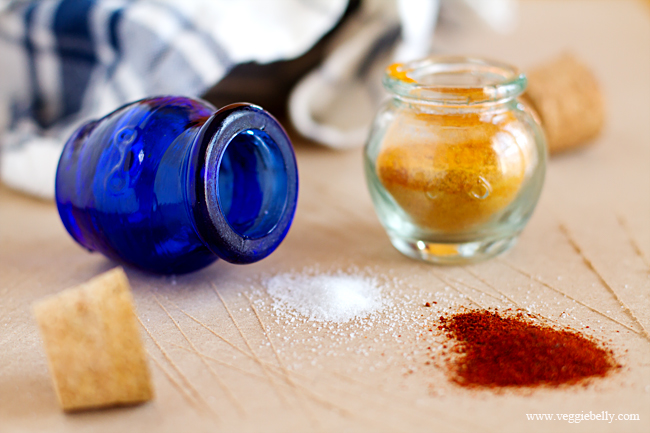
¼ teaspoon ground turmeric
¼ teaspoon or to taste chili powder pr cayenne powder
10 curry leaves
1/2 teaspoon salt

Wash and dry the potato. Peel the potato if you like. I leave the skin on because I like the texture of potato skin in my chips.

Slice the potato into 1/8th inch thick slices lengthwise using a mandoline or a large, sharp knife. Stack up the slices, and cut them lengthwise to form thin sticks, about 1/4th the thickness of a French fry.

Place the potato sticks on a kitchen towel, and gently pat dry.

In a bowl, whisk together the ghee or melted butter or oil, turmeric, chili powder, curry leaves and salt. Add the potato sticks to the bowl and toss well. Now follow one of the below methods.

Oven method – pre-heat oven to 400f. Place the seasoned potato sticks on a non-stick baking sheet or a regular baking sheet lined with parchment paper or silicone non-stick mat. Spread the potato sticks so that they are in a single layer and don’t overlap. You may need to do this in batches. Make sure they are in a single layer, this is what makes them crisp! Bake for 10 minutes or till the chips are golden and crisp. Halfway through baking, check on the chips, and remove any pieces that are already crispy and golden. Rotate the baking sheet and continue baking.

Microwave method – take a microwaveable plate and coat with a few drops of oil. Place the potato chips that have been coated in the turmeric chili ghee/oil. Spead them out into a single layer. You may need to do this in batches. Microwave on high for 2-4 minutes or until the chips are golden and crisp. Cooking time will vary depending on the microwave, so check on the chips periodically.

******************

Are you a fan of Chef Sanjeev Kapoor?

Join me at his book signing event in Washington DC!

Tickets and details are here – http://sanjeevkapoor-indiqueheights.eventbrite.com/

*******************

Afghan Sweet and Savory Pumpkin or Butternut Squash (Borani Kadoo) & A Giveaway!

This giveaway is closed. Random.org  has picked a random winner!

Winner is comment #98 Shriya!

Please email me your mailing address! veggiebelly@gmail.com

*****************


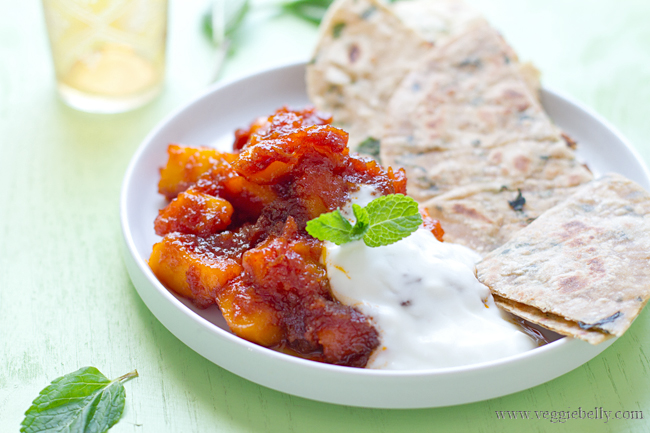
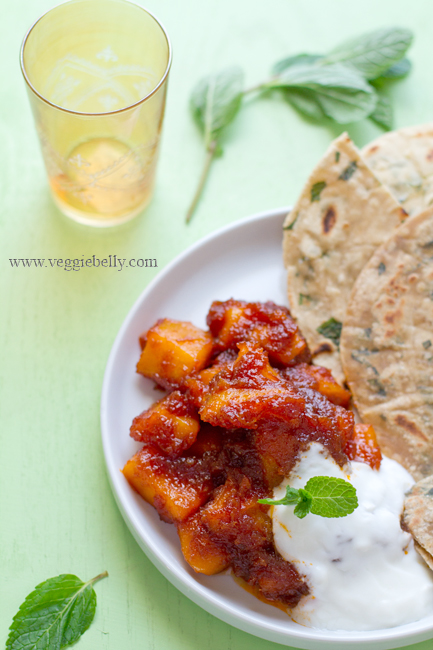
The wonderful ladies behind the amazing Afghan food blog, www.afghancooking.net, say this dish is “America’s favorite Afghan dish”. And Mousa Amiri of Bamiyan Restaurant says this is “one of the most requested” dishes at his restaurant. I can see why. This sweet and spicy pumpkin or butternut squash dish is simple to make, and the flavors are incredible.

This wonderful sweet and savory braised pumpkin or butternut squash recipe is spelled many ways – borani kadoo, borani kadu, brony kadoo, brony kadu, bouranee kadu, bouranee kado, or halwaiy kadu. Whatever you call it, this vegan, vegetarian recipe served with naan makes a great fall or winter time main dish.

Kadu or Kadoo means pumpkin. But because pumpkin is so seasonal, you can use butternut squash instead, which is what I did today.

And now for a giveaway I know you are going to love. You can win Mousa Amiri’s Classic Afghan Cookbook! See details below..

Win a Copy of Mousa Amiri’s Classic Afghan Cookbook!

Mousa Amiri of Bamiyan Afghan restaurant is giving away a copy of  his book  ’Classic Afghan Cookbook’ to one lucky Veggie Belly reader! The recipes in this book are easy, simple, and just yummy!

- To enter the giveaway, just leave a comment below (make sure you enter your email address so I can contact you if you win)

- Last day to enter is March 1st 2011

- A random winner will be picked and announced on March 2nd 2011

- The book will ship to anywhere in the world. Thankyou, Mousa!

*********

Afghan Sweet and Savory Braised Pumpkin (Bouranee Kadu or Borani Kadoo) Recipe

adapted from Katie Sullivan Morford’s Borani Kadoo recipe in the San Francisco Chronicle
serves 2-3
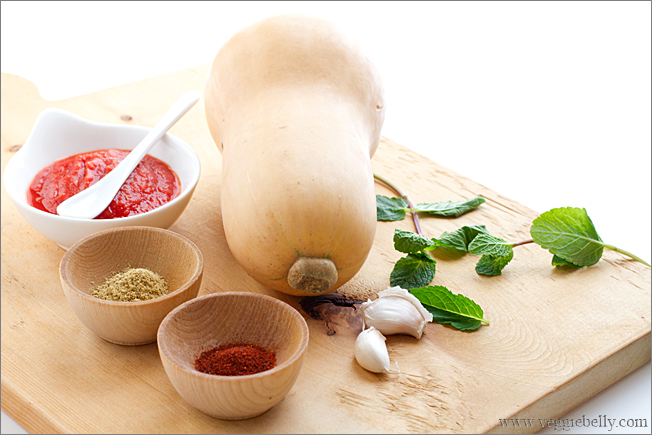
One 1 pound butternut squash or pie pumpkin
1 medium yellow onion
4 tablespoons vegetable oil
1/2 tablespoon minced garlic
1/2 tablespoon minced ginger
1/2 teaspoon turmeric powder
1 teaspoon coriander powder
1/2 teaspoon chili powder or according to taste
1/2 tablespoon tomato paste or 1/2 cup tomato puree
1 cup water
3 tablespoons sugar
salt
Dried or fresh mint for garnish
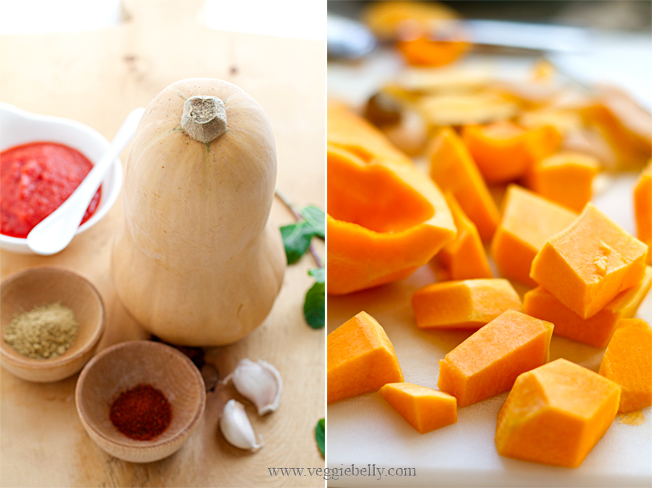
Peel the squash or pumpkin. Using a spoon, scoop out the inner membrane and seeds. Cut into 1 inch cubes and set aside.

Peel and place the onion in a food processor and puree.

Heat oil in a medium heavy bottom pan or wok. Carefully add the onion puree and cook on medium-low heat untill it is golden, about 10 minutes. Then add ginger, garlic, turmeric, coriander powder, and chili powder and stir for 1 minute or untill fragrant.

Now add tomato paste or puree, water, sugar and salt, bring to a boil, while stirring.

Add the chopped butternut squash or pumpkin pieces. Reduce heat and simmer uncovered till the squash is cooked, but still holding its shape, about 20 minutes. Add more water while cooking, if needed.

Garnish with mint and serve with garlic yogurt (vegans can use cashew cream instead) and naan.

Garlic Yogurt

1/2 cup plain yogurt
1 clove galic minced
Salt

Whisk everything together.

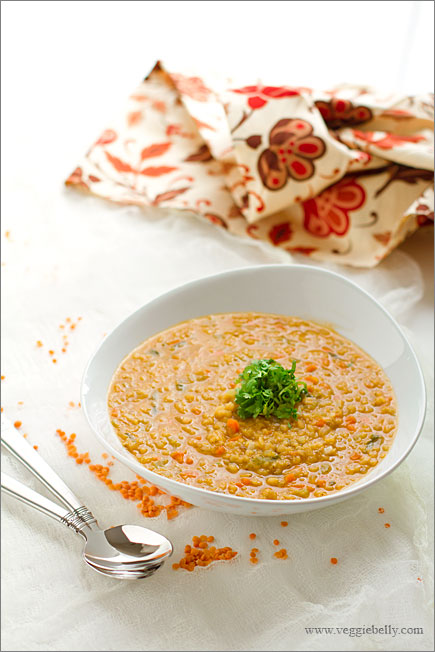
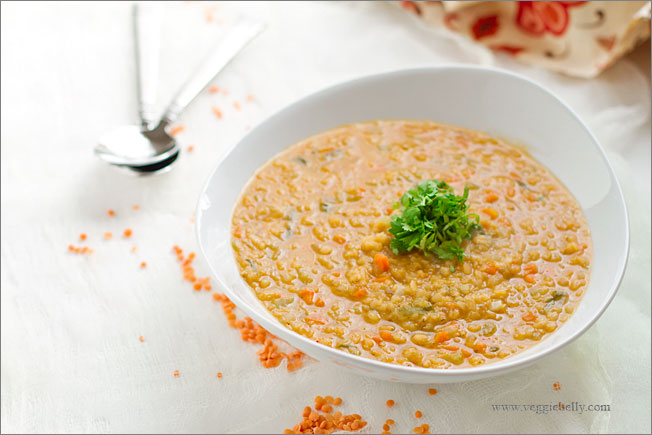
Easy Cream of Red Lentil Soup

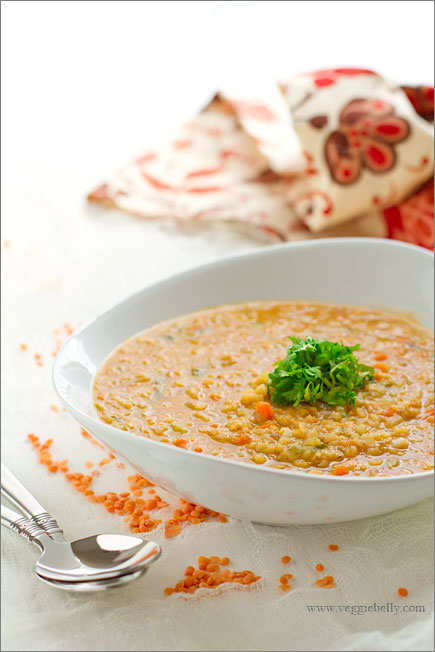
This easy red lentil soup recipe comes together in 15 minutes. Add a touch of cream, greek yogurt or coconut milk (for vegan red lentil soup) and you have a satisfying, easy soup in no time. Serve with crusty bread or over brown rice.

We’ve all had gloopy lentil soup before and hate it! So make sure you dont over cook the lentils. They should be cooked through, but still holding their shape. Their texture and taste is so much better when you dont over cook lentils and make them mushy.

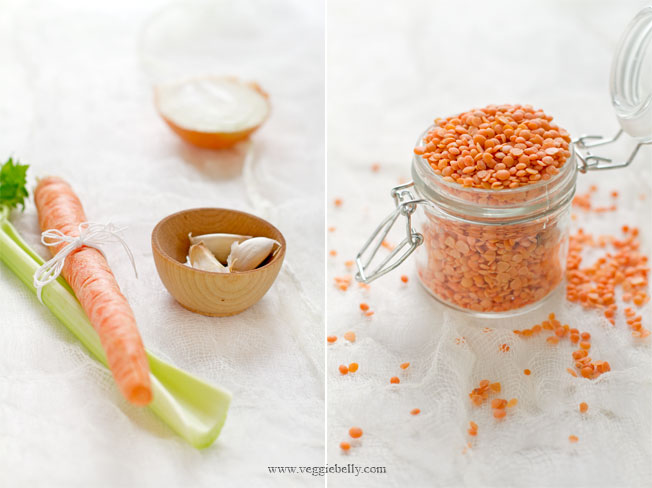
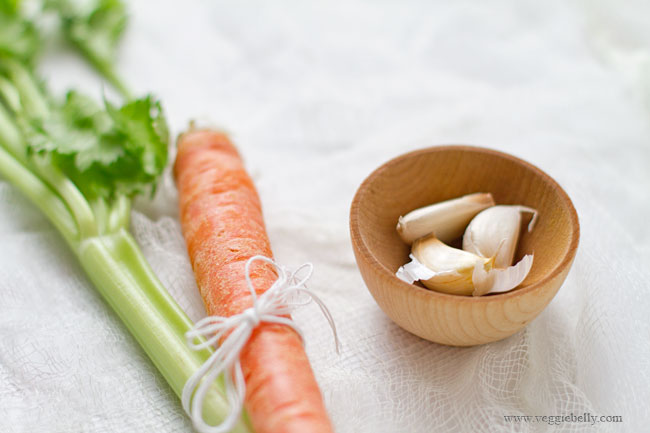
The ingredients are simple for this fuss free soup – carrot, celery, garlic, onion, and red lentils. Then you add a pinch of paprika for heat, if you like, and a little drizzle of cream, greek yogurt or coconutmilk for creaminess. Thats it!

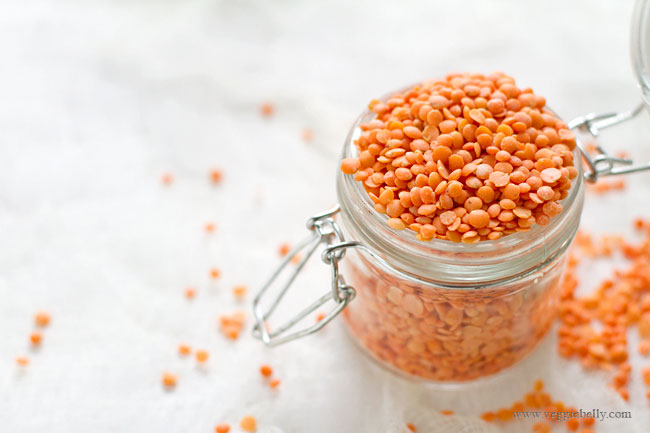
I used masoor dal from the Indian store, which is usually cheaper than other local brands of split red lentils. If you dont have an Indian store near you, Bob’s Red Mill brand red lentils are great.

More lentil soup recipes

Alton Brown’s Lentil Soup recipe with cumin

Giada De Laurentiis Lentil Soup recipe with pasta

Lentil soup recipe from 101 cook books using beluga lentils

Lentil soup recipe  with Cajun flavors on Food Mayhem

Red lentil soup recipe with curry on New York Times

Red lentil soup recipe by Aarti Sequeira

Red lentil soup recipe with sumac on eCurry

Cream of red lentil soup Recipe

serves 2 as a main dish

1 tablespoon olive oil
1 carrot, peeled and chopped finely (about 1/2 cup)
1 celery rib, chopped finely (about 1/2 cup)
1 small onion, chopped finely (about 1/2 cup)
2 cloves garlic, peeled and minced
1 cup dry split red lentils (either Bob’s red mill red lentils or masoor dal from Indian store)
1/2 teaspoon paprika or to taste, optional
salt
2 tablespoons heavy cream or greek yogurt or coconut milk for vegans
For garnish – chopped cilantro or parsley or dill

Heat olive oil in a pan. Add the carrot, celery, onion and garlic. Stir on low heat for about 3 minutes, or till the vegetables are soft. Dont let them brown.

Add the red lentils to the vegetables, and stir for about 1 minutes. Add paprika, salt and 3 cups water. Bring to a boil. Then reduce heat to low, place a lid on the pan, and simmer for 10 minutes or till the lentils are cooked but still holding their shape. Dont let the lentils get mushy. Add more water during cooking, if needed.

When the soup is done, stir in your choice of heavy cream or greek yogurt or coconut milk and turn off heat.

Serve hot, garnished with chopped cilantro, or parsley or dill. Drizzle more cream or yogurt or coconut milk – whichever you are using - over the soup if desired.

Related Posts with Thumbnails